
Repair and Replacement Choices
- Repair usually makes sense when one replaceable part has failed and the rest of the appliance remains sound.
- Replacement usually makes more sense when major damage, repeated failures or discontinued parts prevent a lasting repair.
- Compare the diagnosed repair with replacement, including installation and disposal, rather than deciding from age or a display code alone.
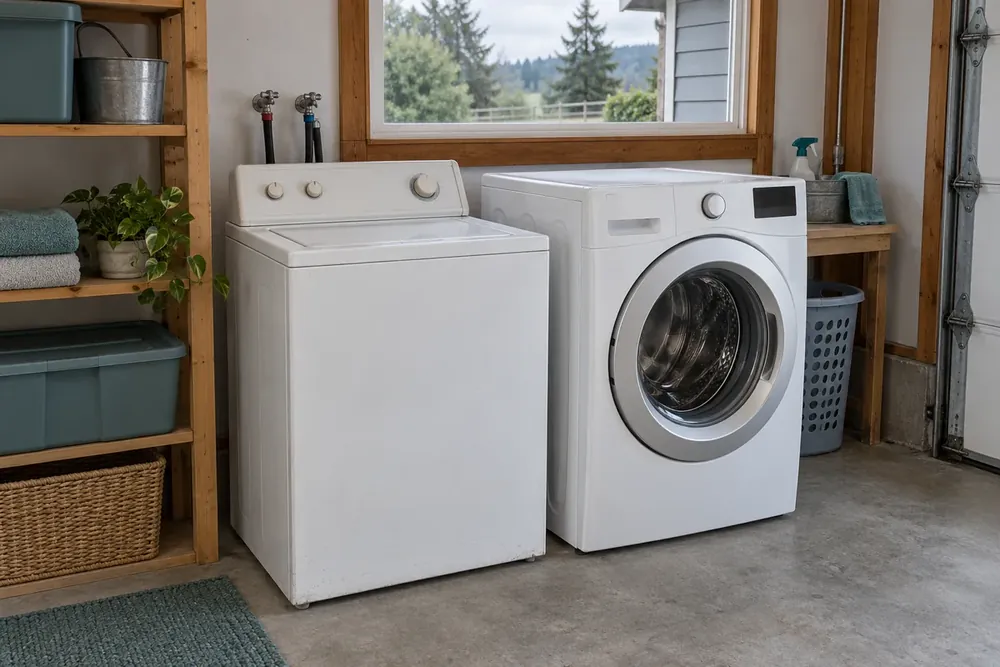
The Failed Part Shapes the Decision
Repair usually makes sense for an isolated fault; replacement deserves a closer look when damage affects the appliance's main structure or several major parts.
Handy to mention on the call:
- The appliance and model number, if visible; refrigerator labels usually sit inside the food compartment.
- What stopped working, any new sound or leak, and the exact display code.
- A recent move, outage, hose change or filter replacement, plus earlier repairs you remember.
You can call without those details. Your technician identifies the fault rather than treating a symptom or code as proof that a particular part has failed.
Appliance Repairs Worth Comparing
Belts, pumps, igniters, door switches, fans and fill valves are often worth replacing when the surrounding appliance remains in good condition.
| Appliance | Usually worth repairing when | Usually time to replace when |
|---|---|---|
| Refrigerator | A fan, door seal or separate control fault is repairable and cooling components remain sound. | An older unit has a failed sealed system, widespread deterioration or several major faults. |
| Freezer | A door seal, fan or control fault explains the trouble and the cabinet is sound. | Major cooling-system damage accompanies poor cabinet condition or repeated failures. |
| Ice maker | A fill valve or ice-making assembly is the isolated fault. | Essential parts are discontinued or multiple failures make repair impractical. |
| Washer | A pump, belt or door switch has failed without major tub damage. | The tub is cracked or major mechanical damage accompanies repeated leaks. |
| Dryer | A belt, roller or door switch is the problem and the drum remains sound. | Rust has eaten through the drum or extensive damage affects several components. |
| Dishwasher | A pump or fill valve is faulty and the tub and racks remain usable. | The tub is damaged or repeated major failures leave several repairs to address. |
| Oven or range | An igniter, door part or control fault has a suitable replacement. | Structural damage or a discontinued essential board prevents a practical repair. |
| Microwave | A repairable door-switch or control fault affects an otherwise sound unit. | Door damage, cavity damage or unavailable essential parts makes replacement the better choice. |
The table offers comparison points, not a diagnosis. Describe the symptoms when calling about appliance repair services; no dismantling is needed.
Can Refrigerators Be Repaired?
Refrigerators are often repairable when the fault is limited to a fan, seal or another replaceable component.
For refrigerator repair vs replace, the important distinction is between an isolated fault and a major sealed-system failure. An older refrigerator with cooling-system damage and other deterioration is a stronger replacement candidate than a sound cabinet with a failed fan. Keep refrigerator and freezer doors shut while discussing a loss of cooling. Food condition needs separate attention; restoring cooling does not establish whether food is safe.
Dryer Repair vs Replace
Dryer repair usually deserves consideration when the drum is sound and a belt, roller or door switch explains the failure.
Say whether the drum turns, whether clothes stay damp and whether drying has become slower. Those observations help distinguish mechanical trouble from a drying problem that needs further checks. A drum rusted through is a different decision from a worn belt. Switch the dryer off at its controls if there is a burning smell, and call; do not run another load to demonstrate the problem.
Can a Microwave Oven Be Repaired?
A microwave can be repaired when the fault has a suitable repair and the door and cooking cavity remain sound.
Countertop and built-in models deserve different replacement comparisons because removal and installation can add work. Mention whether the appliance runs without heating, stops when the door moves or makes an unusual sound. Leave internal inspection to your technician and stop using a microwave with visible door damage.
Age, Energy Use and Parts Supply
Age helps frame the decision, but appliance condition and the availability of the exact replacement part matter more than a birthday alone.
Mention previous repairs and whether the appliance still performs its usual tasks between failures. Compare the energy information for a proposed replacement with the existing model rather than assuming a new unit will deliver a particular saving. Discontinued boards can make an otherwise small fault impractical to repair. One of our local appliance repair partners will explain the proposed work and its price so you can compare it with replacement before work begins.
Disposal in Whatcom County
An appliance being replaced needs an arranged disposal route, and refrigerators and freezers require refrigerant recovery before final disposal.
Whatcom County's garbage and recycling page lists private haulers and self-haul locations. When arranging removal, ask the selected hauler or recycler about accepting the particular appliance and handling collection or drop-off. The county list does not establish that every location accepts every appliance.
EPA's safe-disposal requirements place responsibility on the final disposer to ensure refrigerant is recovered. Arrange that handling through the disposal service; keep the cooling system intact. Include removal and disposal in the replacement comparison rather than assuming either is included with delivery.